
Home / Solutions / Highways & corridors / Environmental & Road Monitoring
Highways & corridors
Environmental & Road Monitoring
Measure the load on the road and the conditions around it.

Overview
What this solution delivers.
Overloaded vehicles shorten the life of pavements and structures. Fog, dust, rain and standing water change how safely a road can be used. Both can be measured continuously, without stopping traffic.
We deliver weigh-in-motion (WIM) stations, road weather information systems (RWIS) and traffic counting sites, and connect them to the systems that use the data: message signs, the control centre and asset management.
Typically for: road authorities, asset owners and maintenance contractors.
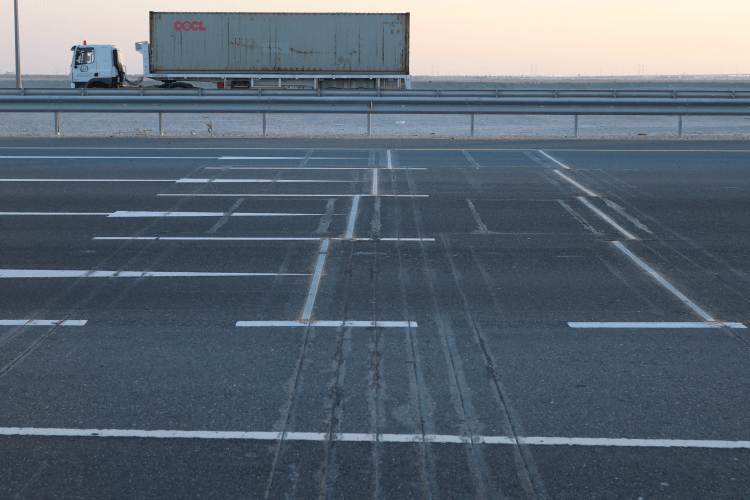
How it works
Follow the system, step by step.
Select a numbered point or a step. Drag the model to look around.
Drag to rotate · pinch or use + and − to zoom
Illustrative model. Generic equipment, not a specific site.
Challenges
Where networks typically struggle.
Unseen overloading
Static weighbridges check few vehicles and are easy to avoid.
Sudden changes in conditions
Visibility and surface conditions can change within a short stretch of road.
Planning without data
Maintenance and design decisions need measured volumes, classes and loads.
Sensor installation quality
In-road sensors perform only as well as the pavement and installation allow.
What we offer
What the scope can include.
Each project is scoped to its site. These are the parts we design, supply, integrate and maintain.
- Weigh-in-motion stations
- Road weather stations with visibility and surface sensors
- Traffic counting and classification sites
- Automatic warnings on message signs
- Data integration and reporting
Technology categoriesWeigh-in-Motion (WIM)Road Weather Systems (RWIS)Traffic counting & classification
Benefits
What changes for the people who run the site.
Loads measured in motion
Weigh-in-motion screens vehicles without pulling them off the road.
Conditions known as they change
Weather stations report visibility and surface state along the route.
Warnings without delay
Measured conditions can trigger messages on signs automatically.
Evidence for maintenance
Loading and traffic data support pavement and structure planning.
Related solutions
Solutions that share sectors, settings or functions with this one.
 Highways & corridors
Highway & Road ITS
Inform drivers, detect incidents and manage lanes on high-speed routes.
Explore solution Urban mobility
Road Safety
See risk earlier. Warn drivers sooner. Keep the evidence sound.
Explore solution Operations & intelligence
Traffic Intelligence & AI
Turn what the network already measures into decisions.
Explore solutionAlso listed underTransportation & MobilityInfrastructure & Construction ProjectsHighways, Expressways & TunnelsVehicle Detection & CountingVariable Message Signs & Lane ControlWeigh-in-MotionRoad Weather MonitoringTraffic Analytics & Reporting
Questions
Common questions.
Is weigh-in-motion accurate enough for enforcement?
It depends on the system class, the site and the legal framework. WIM is commonly used to screen vehicles for a static check; direct enforcement needs certified equipment and regulation to match.
Can weather data trigger warnings automatically?
Yes, with thresholds agreed with the operator.
Discuss road monitoring for your network.
The request opens with this solution already selected.